
A tag at the service counter, on a courtesy card, or taped inside a glovebox. Customers see the service menu, leave a review, and come back for the next oil change — all without a phone call to your front desk.
Pricing and package details sit on a laminated sheet only staff can see. A customer asking "what's included in the full detail?" waits on hold or reads a fading printout.
A generic "please review us" text sent days later gets ignored. The moment a customer is happiest — right after picking up a clean, running car — passes without an ask.
The little windshield sticker with a mileage and date is the whole reminder system. It fades, gets scraped off at the car wash, or simply goes unnoticed for another 5,000 miles.
One tag shows the service menu today, asks for a review tomorrow, and hands over a coupon for the next visit next month — all the same physical tag, reassigned from the dashboard.
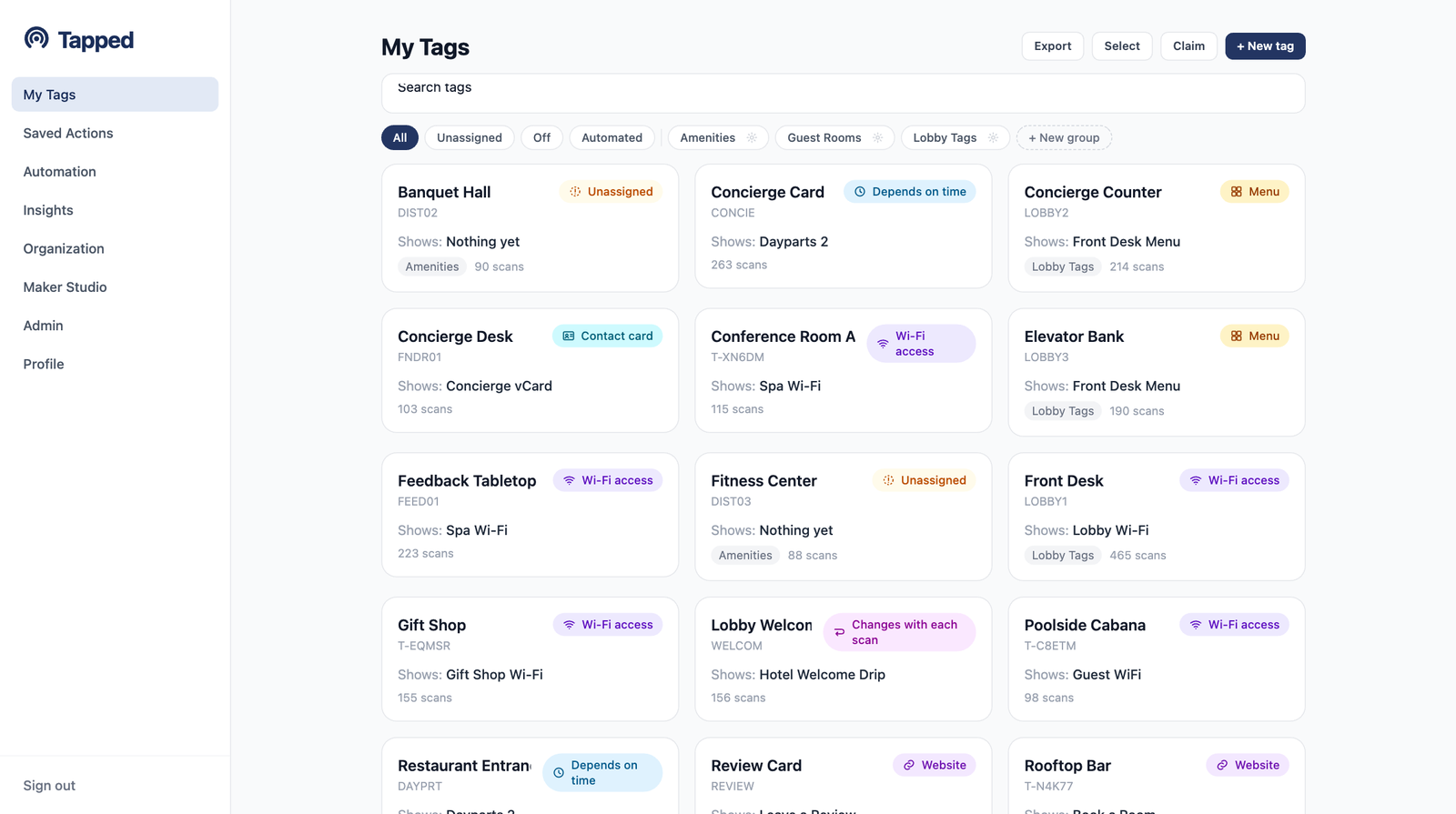
Group tags by bay, courtesy card, or vehicle and see which ones bring customers back.
A tag at the service desk or waiting area links to a service-menu file or page listing packages, add-ons, and current pricing. Update a price or add a seasonal package without reprinting a single sheet.
A tag on the pickup receipt or courtesy card asks how the service went. High ratings route straight to your Google or Yelp page; a low rating opens a private feedback form that lands in your dashboard instead.
A schedule swaps the same tag from a review request to a coupon for the next oil change or seasonal service. A tag on the courtesy card saves your shop's contact card directly to a customer's phone.
A customer named Grant taps the counter tag while waiting and sees the shop's full service menu, including a brake-and-rotor package he didn't know was bundled with an alignment check.
A tag on the loaner car's dash card saves Redline's number, hours, and directions straight to Grant's phone in case he needs to reach the shop during the day.
At pickup, a tag on the receipt asks how the visit went. Grant rates it five stars and gets routed straight to the shop's Google review page while the smooth brake pedal is still fresh in his mind.
A schedule window swaps the receipt tag to a discount for a seasonal service package, timed to when his mileage typically calls for it.
A customer browsing the full service menu at the counter finds the brake-and-rotor bundle or seasonal detail package the front desk never had time to mention. And when a schedule swaps the receipt tag to a next-visit coupon with an expiry, the reminder that used to be a fading windshield sticker becomes a reason to book.
The review ask lands at the moment the customer is happiest — keys in hand, brakes smooth. High ratings go straight to your Google or Yelp page, where the next customer is comparing shops; low ratings open a private form you see first, while there is still time to make it right.
When a package price moves or a seasonal service launches, the update goes to every counter, courtesy card, and loaner tag at once — no laminated sheets to redo, no stickers to replace. The same tags get reassigned season after season, so the hardware cost never repeats.
Tag the counter and the courtesy cards once. The menu, the review ask, and the next-visit offer keep changing — and keep bringing the same cars back.
Price and offer updates, pushed to every tag at once
Windshield stickers to fade or scrape off
Of customer taps tracked by bay, card, or vehicle
Free tags to get your counter and loaners set up
Tag the counter, the courtesy cards, and the loaners once. Let the tap handle the menu, the review, and the reminder for the next visit.
Start free with 5 tagsNo credit card required. Upgrade any time.